
There's a part inside your tank-style water heater that you've probably never seen and never thought about. It doesn't heat anything or regulate temperature. All it does is rust away so your tank doesn't have to. That part is the anode rod, and it's one of the main reasons a water heater can last as long as it does.
We get a lot of calls at Spicewood Plumbing from homeowners who just found a puddle around the base of their heater. Nine times out of ten, the tank has been corroding from the inside for a while, and nobody checked the rod. Here's what it does, how long it lasts, and when it's worth having someone take a look.
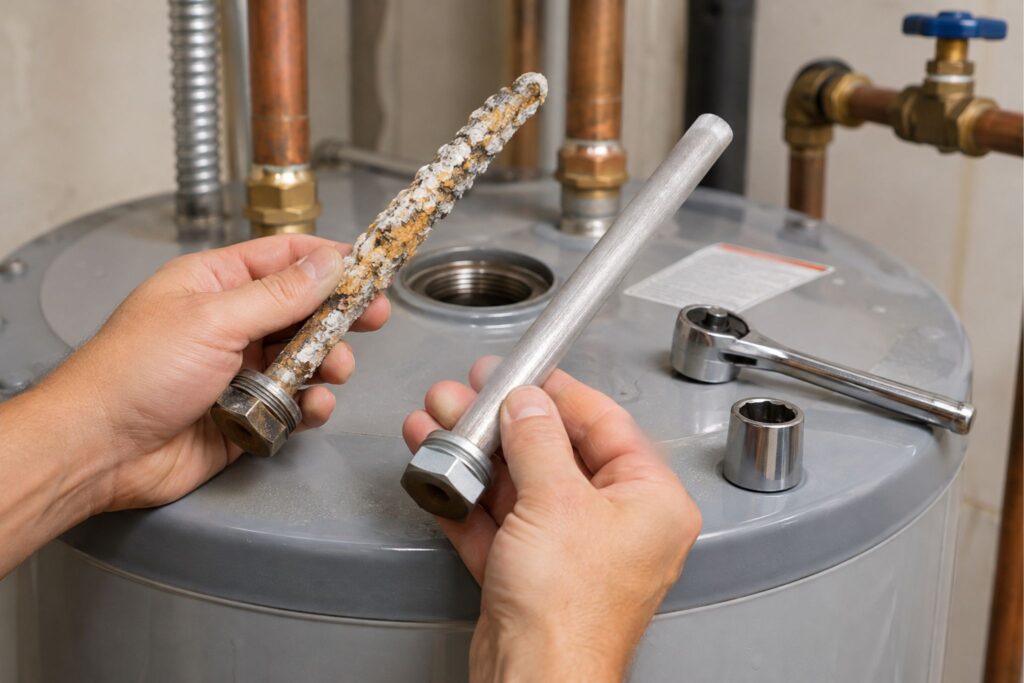
What Is an Anode Rod?
An anode rod is a long metal rod that hangs down inside the tank. It's usually made of magnesium, aluminum, or an aluminum-zinc alloy.
Its job is to protect the steel tank from corrosion. Most tanks have a glass lining, but that lining isn't perfect. Tiny gaps and weak spots let water reach bare steel, and that's where rust starts.
The rod is built to corrode first. Because it gives itself up to save the tank, plumbers call it a sacrificial anode.
How It Protects Your Tank
Water carries minerals and dissolved elements, and when it touches metal, a small electrochemical reaction takes place. Left alone, that reaction eats at the steel.
The rod is made from a metal that reacts more readily than steel does, so the corrosion goes after the rod instead. Picture a bodyguard taking the hit meant for someone else. As long as there's enough rod left, the tank stays shielded.
It isn't a force field, though. A good rod can slow corrosion and help delay a tank failure, but it can't promise your heater will last a set number of years.
Why "Sacrificial"?
Most parts in an appliance are meant to last. This one is meant to wear out. A thinning rod isn't a defect, it's proof the rod is working.
Eventually the outer metal is gone and you're left with the bare steel core. At that point it can't protect much of anything, which is why an anode rod shouldn't be installed once and forgotten.
What Happens When the Rod Is Used Up?
Once the rod is gone, the tank takes over the job of corroding, and that's a problem you can't fix. A tank with a real leak can't be patched. In most cases the whole water heater has to be replaced.
Swapping a worn rod in time is a cheap way to avoid that. But it only helps if the tank is still sound. If it's already rusted through or leaking, a new rod won't undo the damage, and a plumber will need to look at whether repair or replacement makes more sense.
Signs the Rod May Need Attention
Here's the frustrating part: you usually won't get a clear warning. The rod is inside the tank, so you can't check it by looking at the outside of the heater.
Some things are worth a closer look:
1. A rotten-egg or sulfur smell from the hot water.
2. Rust-colored or discolored hot water.
3. Popping or rumbling noises from the tank.
4. Hot water that isn't keeping up like it used to.
4. Any moisture or leaking near the base.
5. An older heater that's never had maintenance.
None of these automatically point to the anode rod. Smells and discoloration, for example, can come from several different causes. That's why it's better to have a plumber inspect the whole system than to guess.
How Long Does an Anode Rod Last?
A typical rod lasts around three to five years, but that number swings a lot. Water chemistry, hardness, how much hot water your household uses, and the type of rod all play a part. The Texas Hill Country is known for hard water, which can wear rods down faster, so a calendar-based schedule won't always fit.
The manufacturer's maintenance guidelines are a good starting point. Beyond that, the most reliable answer comes from a plumber checking the rod itself.
Types of Anode Rods
Not all rods are the same, and the right one depends on your heater and your water.
Magnesium. A common choice that offers strong protection, though it can wear faster in hard water.
Aluminum. Sometimes it lasts longer than magnesium, depending on your water.
Zinc-aluminum. Often used when hot water has a sulfur smell. Odors have more than one cause, so swapping the rod isn't a guaranteed fix.
Powered. These use a small electrical current instead of wearing away. They can last much longer, but they aren't right for every heater, so check the manufacturer's requirements first.
How Your Water Affects the Rod
Two identical water heaters can have very different rod lifespans because the water going into them isn't identical. Hardness, mineral content, temperature, and treatment equipment all change how quickly the rod gets used up.
If you've recently installed a water softener or noticed a change in your water, it's a good time to have the heater checked. Softened water, for instance, can speed up rod wear.
Can a New Rod Make Your Water Heater Last Longer?
A healthy rod can help the tank resist corrosion, and that can add years to its life. It's not a guarantee. Heating elements, valves, and connections can still fail for their own reasons.
Still, replacing a small, inexpensive part to protect a much more expensive appliance is usually a good trade.
When to Have It Inspected
If your heater has been running for several years and nobody has ever looked at the rod, it's reasonable to book an inspection. Do the same if you notice any of the warning signs above, if you live with hard water, or if you've bought a home and have no idea what maintenance the heater has had.
Why This Is a Job for a Plumber
We don't recommend swapping an anode rod yourself. You're dealing with a pressurized tank of hot water, plus gas or electricity depending on the unit. Rods that have sat for years can also be stuck tight, and forcing one can damage the tank or fittings.
A plumber can check the rod, find the right replacement, and look over the tank and other components while they're there. That last part matters most, because replacing a rod only makes sense if the tank underneath is still in good shape.
Rod Replacement or a New Water Heater?
This is the question a plumber can actually answer for you. If the tank is sound and the rod is just worn, a new rod can keep protecting the heater for years. If the tank is already leaking, badly corroded, or has several other problems, putting money into a rod probably won't pay off. We'd rather tell you that up front than sell you a part that doesn't fix the real issue.
Frequently Asked Questions
What does an anode rod do in a water heater?
It protects the steel tank from rust. The rod is made of a metal that corrodes more easily than steel, so it wears away first and the tank lasts longer.
How often should an anode rod be replaced?
Most last about three to five years, but hard water, heavy hot water use, and the type of rod can shorten or stretch that. A plumber checking the rod itself is more reliable than a calendar.
How do I know if my anode rod is bad?
You can't see it from outside the tank. Rotten-egg smells, rusty hot water, rumbling noises, weaker hot water, or leaks near the base are all reasons to get an inspection, though each can have other causes.
Can I replace an anode rod myself?
We don't recommend it. The tank holds hot water under pressure, the heater runs on gas or electricity, and an old rod can be stuck so tight that forcing it damages the tank or fittings.
Is it worth replacing the anode rod on an old water heater?
Only if the tank is still sound. If it's already leaking or heavily corroded, a new rod won't fix it, and water heater replacement is usually the better investment.
Does a water softener affect my anode rod?
It can. Water treatment changes how fast the rod is used up, so if you've added a softener or your water has changed, have the heater checked.
Get Your Water Heater Checked in Spicewood
The anode rod works quietly in the background and wears out on purpose. Catching it before it's gone can save you from a leaking tank and an unplanned replacement.
If you're in Spicewood, TX, and you're not sure what shape your water heater is in, give Spicewood Plumbing a call. We'll look at the actual condition of your equipment and tell you plainly what it needs, whether that's a new rod, some routine maintenance, or a conversation about replacement.
We also serve homeowners in Marble Falls, Horseshoe Bay, Burnet, Lakeway, and Bee Cave.