

Y'all, we've seen it a hundred times here at Spicewood Plumbing: a homeowner walks into their utility closet or garage, spots a little puddle near the water heater, and thinks, "eh, it's probably nothing." We get it — with everything else on your plate, a small drip doesn't exactly scream emergency. But here's the thing: a leaking water heater is one of those problems that looks small on the surface and can be a much bigger deal underneath. So let's break down exactly why that little puddle deserves your attention, what might be causing it, and what you should do about it (hint: it usually involves calling us).
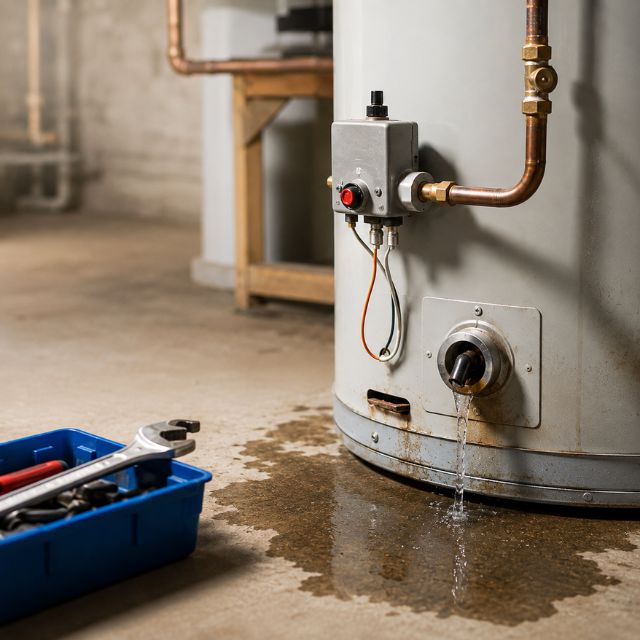
Is a Leaking Water Heater Dangerous?
Short answer? Yes, it can be. Now, we're not saying every drip is going to send your house up in flames or flood your living room by dinnertime. Plenty of leaks start small and stay small for a while. But a leak is almost always a symptom of something going on inside that tank — and left alone, that "something" tends to get worse, not better. Whether it's a worn-out valve, a corroding tank, or a buildup of pressure that shouldn't be there, the bottom line is that a leaking water heater is your unit waving a little flag and saying "hey, somebody should probably look at this."
Potential Dangers of a Leaking Water Heater
Flooding and Water Damage
Water heaters typically hold somewhere around 40 to 50 gallons, and that water's not shy about finding its way into your flooring, drywall, and subfloor if given the chance. Even a slow leak, over weeks or months, can quietly soak into places you can't see until the damage is already done.
Mold and Mildew Growth
Here in the Texas Hill Country, humidity is already working against us. Add a steady water leak into the mix, and you've basically built a five-star resort for mold and mildew. Mold can start growing within a day or two of sustained moisture, which means a leak you've been "meaning to check out" could already be a mold problem by the time you get around to it.
Scalding and Burn Risks
Most water heaters run somewhere between 120°F and 140°F. That's plenty hot enough to cause a nasty burn in seconds, especially if the leak is coming from a pressurized connection or the T&P (temperature and pressure) relief valve. These leaks aren't always obvious either, which makes them extra risky for curious kids or pets who might wander too close.
Electrical Shock and Fire Hazards
If you've got an electric water heater, water and electricity mixing is never a good combination. A leak that reaches wiring, outlets, or the unit's electrical components can cause a short circuit — which can mean anything from a nasty shock to an actual electrical fire.
Gas Leaks and Carbon Monoxide Risks
Gas water heaters bring their own set of concerns. A leak can interfere with the combustion process, leading to inefficient heating, soot buildup, or — in more serious cases — damage to the venting system that lets carbon monoxide creep into your home. If you ever smell that classic rotten-egg odor near your water heater, that's not a "wait and see" situation.
Explosion and Pressure Hazards
This one's rare, but it's real. Water heaters build pressure as they heat, and the T&P valve is there to release that pressure before it becomes a problem. When that valve fails — usually due to corrosion or sediment — pressure can keep climbing with nowhere to go. In the worst-case scenario, that can lead to a tank rupture. It doesn't happen often, but it's exactly the kind of "rare but serious" risk that makes ignoring a leak a bad idea.
Common Causes of Water Heater Leaks
Temperature and Pressure (T&P) Valve Issues
This valve is your water heater's safety net. When it malfunctions, it can either leak on its own or fail to do its job of releasing excess pressure — both of which are problems.
Sediment Buildup and Anode Rod Failure
Your water heater has an anode rod that attracts corrosive minerals so your tank doesn't have to. Once that rod wears out — usually somewhere around the three- to five-year mark — sediment can build up at the bottom of the tank and eventually create pinhole leaks.
Tank Corrosion and Rusting
Over time, the steel in your tank is going to rust, especially once that anode rod stops doing its job. Rust-colored water coming out of your hot tap is often a telltale sign.
Cracked Storage Tanks and Seams
Age, manufacturing defects, or plain old thermal stress from constant heating and cooling cycles can cause cracks, particularly along the seams where tank sections meet.
Faulty Drain Valves
If your drain valve is worn, loose, or wasn't closed all the way after a flush, it's an easy source of leaking.
Loose or Damaged Pipe Connections
Sometimes the water heater itself is perfectly fine, and the real culprit is a loose fitting on the hot or cold water lines.
Condensation Buildup
Every once in a while, what looks like a leak is just condensation — similar to the sweat that forms on a cold glass of tea on a hot Texas afternoon. Worth ruling out, but not something to assume without a proper look.
Signs Your Water Heater May Be Leaking
So why do water heaters leak in the first place? A few usual suspects:
We know not everyone's checking their water heater daily (understandable — it's not exactly thrilling stuff). Here's a quick list of things to keep an eye and ear out for:
Puddles or damp spots around the base of the unit.
Rust-colored or discolored hot water coming from your taps.
A noticeable drop in hot water supply or water pressure.
Rumbling, popping, or hissing sounds coming from the tank.
Musty odors or visible mold near the unitWater pooling higher up, near fittings, valves, or the top of the tank.
Water Heater Leaking From the Top vs. the Bottom
Top Leaks: Common Causes
A leak up top is usually the "easier" kind of good news, plumbing-wise. It could be a plumbing issue happening above the unit (check that ceiling and surrounding pipes), a loose or failing T&P valve, or a leaky cold water inlet valve.
Bottom Leaks: Common Causes
Bottom leaks tend to be a little more serious. They're often tied to a problematic drain valve, condensation, or — the big one — internal tank corrosion that's finally worked its way through the metal.
Consequences of Ignoring a Water Heater Leak
Putting off a water heater repair doesn't make the problem disappear — it just gives it time to grow. An ignored leak can lead to escalating water damage, expanding mold growth, a shortened lifespan for your water heater (meaning an earlier, more expensive replacement), and creeping increases in your energy bills as the unit works harder than it should. None of that sounds like a great trade-off for avoiding a phone call.
What to Do Immediately If Your Water Heater Is Leaking
Shut Off the Power
For electric units, head to your breaker panel and flip the corresponding breaker. For gas units, find the fuel shut-off valve on the line feeding into the heater.
Shut Off the Water Supply
Locate the cold water shut-off valve, usually near the top of the unit, and close it to stop feeding the leak.
Check for Hazards
Keep your distance from any standing water near outlets or electrical devices. If you catch a whiff of gas or hear hissing, don't stick around to investigate — leave the area and call for help right away.
Avoid Attempting Repairs Yourself
We know it's tempting to grab some plumber's putty or epoxy and call it a day, but water heater issues involve pressure, heat, gas lines, and sometimes electrical components all at once. This isn't the spot for guesswork — it's the spot for a trained set of eyes.
Why You Should Call a Licensed Plumber Right Away
Here's the honest truth: diagnosing a water heater leak correctly takes experience. Is it the valve? The tank? A fitting? Sediment? The only way to know for sure — and to know whether you need a repair or a full replacement — is to have a licensed professional take a look. At Spicewood Plumbing, we've walked into more than a few "small leaks" that turned out to be tanks on their last leg, and catching that early can save you from a much bigger mess (and a much bigger bill) down the road.
Preventing Future Water Heater Leaks
1. Routine Inspections and Maintenance
An annual check-up for your water heater is a small investment that can catch problems long before they turn into leaks.
2. Maintaining Proper Temperature and Pressure
Keeping your thermostat set between 120°F and 130°F and making sure your pressure stays in a safe range takes unnecessary strain off your tank.
3. Replacing Worn Components
Anode rods, T&P valves, and drain valves all have a lifespan. Staying ahead of replacements means your water heater is far less likely to spring a surprise leak.
Frequently Asked Questions
Is a leaking water heater always an emergency?
Not always, but it's always worth checking out. Even a minor leak can point to a bigger issue brewing.
Can a water heater really explode?
It's rare, but yes — usually tied to a failed pressure relief valve allowing pressure to build unchecked.
Should I try to fix a small leak myself?
We'd steer you away from that. Between the heat, pressure, and potential gas or electrical involvement, it's best left to a professional.
How often should I have my water heater inspected?
Once a year is a solid rule of thumb, especially given how hard our Central Texas water can be on tanks over time.
Final Thought
Look, nobody wakes up excited to deal with a water heater problem. But a little bit of attention now — recognizing the signs, understanding the risks, and knowing when to shut things off — can save you from a genuinely bad day later. Water heaters aren't something to gamble on, and here in Spicewood, where hard water and hot Texas summers already put extra strain on your plumbing, it pays to stay ahead of trouble rather than react to it. If you've spotted a leak, heard a strange noise, or just have a nagging feeling something's not right with your water heater, don't wait around for it to get worse — give the team at Spicewood Plumbing a call and let us take a look before a small drip turns into a big headache.