

Picture this: you walk into your utility closet (or basement, or garage — wherever your water heater lives) and step right into a puddle you weren't expecting. Not exactly how you wanted to start your day, right? Here at Spicewood Plumbing, we get calls about leaking water heaters all the time, and honestly, it's one of those situations that can feel way more stressful than it needs to be — especially if you don't know what's causing it or what to do next.
The good news? A leaking water heater doesn't have to turn into a full-blown disaster. With a little know-how, you can take a few quick, safe steps to protect your home while you wait for a professional to sort out the real fix. In this guide, we're walking you through everything — from spotting the warning signs to understanding what's actually happening inside that tank, to why calling in a pro (hi, that's us) is always the smartest move. Let's get into it.
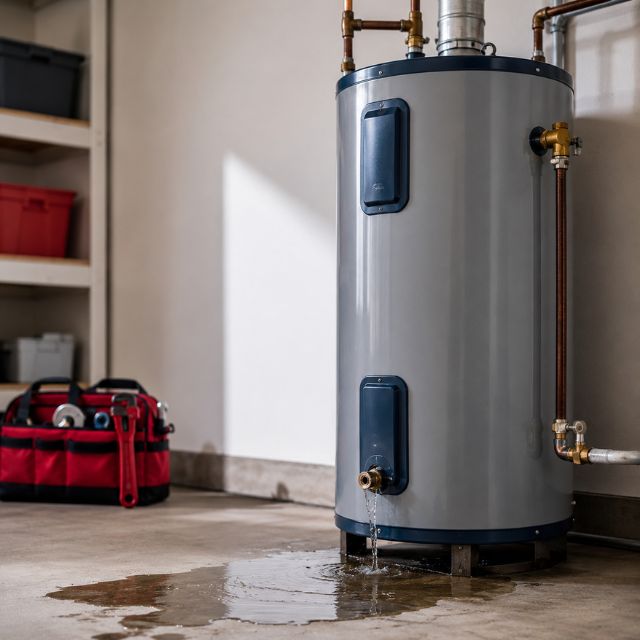
How to Spot the Signs of a Leaking Water Heater
Sometimes a leak is obvious — like, "there's a lake in my garage" obvious. But other times, it sneaks up on you. Here's what to keep an eye (and ear) out for:
1. Water pooling around the base of the unit. Even a small puddle is worth investigating. It doesn't take much water to signal a real problem.
2. Damp spots, discoloration, or soft flooring near the heater, especially if it's tucked away in an attic, closet, or crawlspace where you might not notice right away.
3. Dripping or rushing water sounds coming from the unit, even if you can't see any water yet.
4. Your hot water is running out faster than usual. This can be a sign that a leak is quietly draining your heater's efficiency (and your patience).
If you spot any of these, don't just shrug it off. Water heaters are pretty resilient, but once they start leaking, the problem tends to get worse, not better, on its own.
Is a Leaking Water Heater an Emergency?
Here's the honest answer: sometimes yes, sometimes no — but it's always worth treating seriously until you know for sure. A slow drip from a loose fitting is different from water gushing out because the tank itself has cracked. The tricky part is that a "minor" leak today can turn into a "call us at 2 a.m." leak tomorrow if it's ignored.
A few things determine how urgent the situation really is:
Where the leak is coming fro
How old your water heater is
Whether there's any risk of the leak reaching electrical components or a gas line.
Because those risk factors aren't always obvious just by looking at a puddle, we always recommend treating a leak like it could be serious until a professional confirms otherwise. Better safe than soggy.
Why Leak Location Matters: Top, Side, and Bottom Leaks
Here's something a lot of folks don't realize: where the water is coming from tells a pretty specific story about what's actually wrong.
Leaks from the top usually point to loose connections, corroded pipes, or a faulty Temperature and Pressure (T&P) relief valve. If that valve is dripping constantly, it could mean the valve itself has failed, or there's too much pressure built up inside the tank.
Leaks from the side often mean trouble with the heating element gaskets (common in electric units) or a side-mounted T&P valve doing its job a little too enthusiastically.
Leaks from the bottom are the ones that make us raise an eyebrow. If it's coming from the drain valve, that's usually a pretty simple, affordable fix. But if water is seeping from the tank body itself, that's internal corrosion talking — and unfortunately, that almost always means it's time for a replacement, not a repair.
Oh, and one more thing: sometimes what looks like a leak is just condensation, especially during humid Texas summers. A trained eye can tell the difference pretty quickly, which saves you from worrying over nothing (or missing something that actually matters)
Common Causes of Water Heater Leaks
So why do water heaters leak in the first place? A few usual suspects:
Sediment buildup. Especially common with hard water, sediment settles at the bottom of the tank, forces the unit to work harder, and can eventually crack the tank's lining.
Internal corrosion. Every tank has a sacrificial anode rod whose whole job is to corrode instead of the tank itself. Once that rod wears out and isn't replaced, the tank starts rusting — and leaking.
High water pressure. Anything above 50–60 psi puts extra strain on the tank and its components, and is a common reason T&P valves start leaking.
Loose fittings or faulty parts, like drain valves or T&P valves — usually a quick and affordable fix.
Age. Most tank water heaters last somewhere between 8 and 12 years. If your unit is getting up there in age and starts leaking, it might just be telling you it's ready to retire.
Immediate Safety Steps to Take
Okay, so you've found a leak. Before anything else, safety comes first. Water plus electricity or gas is never a good combo, so here's what to do right away.
A. Turn Off the Power or Gas Supply
If you have an electric water heater, head to your breaker panel and flip the circuit breaker connected to the unit. This eliminates any shock risk while water is present.If you have a gas water heater, turn the gas valve to "pilot" or fully off. This helps prevent any gas-related hazards while the leak is being addressed.
B. Shut Off the Cold Water Supply Valve
Find the cold water inlet pipe at the top of your water heater and turn the shut-off valve clockwise until it stops. This keeps more water from entering the tank and making the leak worse.
C. Turn Off the Home's Main Water Supply (If Needed)
If the leak keeps going even after you've shut off the water heater's own supply valve, you may need to turn off your home's main water shutoff. This is usually located near the front of the house, in a utility closet or garage, or outside near the water meter. Once it's off, check a faucet in your home to confirm the water flow has actually stopped.
The Dangers of Ignoring a Leaking Water Heater
We get it — sometimes a small leak feels easy to put off dealing with. "It's just a little water, I'll deal with it later." But here's the thing: leaks rarely stay small, and ignoring one can lead to a whole list of headaches, including:
1. Water damage to floors, walls, ceilings, and anything unlucky enough to be sitting nearby
2. Mold growth, which isn't just gross — it can actually impact your family's health and get expensive to remediate
3. Higher water bills, since a leak is essentially wasted water running up your utility costs
4. Electrical hazards, particularly with electric water heaters, if water reaches wiring or components
5. Gas leaks, in the case of gas-powered units, which can pose serious fire and health risks
6. Tank failure, where a severe leak causes the tank to fully burst, leading to major flooding and a much bigger (and pricier) mess.
None of these are things you want to deal with, which is exactly why acting fast on a leak — even a small one — really does matter.
Repair vs. New Water Heater Installation: How Professionals Make the Call
This is probably the question we hear most: "Can this be fixed, or do I need a new water heater?" The honest answer is: it depends, and that's exactly why a professional diagnosis matters so much.
Generally speaking, repair makes sense when the leak is coming from a replaceable component—such as the drain valve, temperature and pressure (T&P) relief valve, or a loose plumbing connection. These repairs are often quick, affordable, and worthwhile, especially if your water heater is relatively new and the tank itself is still in good condition.
However, a new water heater installation becomes the smarter and safer solution when the tank itself has failed. If water is leaking from the tank due to internal corrosion, the structural integrity of the unit has been compromised, making repairs unsafe and unreliable. Installing a new water heater restores dependable hot water while improving energy efficiency and reducing the risk of future leaks.
Age also plays an important role in the decision. If your water heater is more than 10 years old and requires a major repair, investing in a new water heater installation is often more cost-effective than continuing to repair an aging system. A modern unit can provide better performance, improved efficiency, and greater peace of mind for years to come.
Why Professional Diagnosis and Repair Are Essential
We know DIY culture is big these days, and for a lot of home projects, that's great! But water heaters are a different animal, and here's why we always recommend leaving the diagnosis and repair work to a trained professional:
Safety first. Water heaters involve high-voltage electricity, gas lines, and pressurized, scalding-hot water all in one unit. A small mistake can lead to shocks, gas leaks, or burns.
Accurate diagnosis matters. An experienced technician can tell the difference between a minor issue and a serious failure almost immediately — which saves you from paying for the wrong fix or missing a bigger problem.
Specialized tools and know-how. Proper repairs often involve fully draining the tank and using tools most homeowners simply don't have lying around.
Warranty protection. Attempting a repair yourself can sometimes void your manufacturer's warranty, which is the last thing you want if something goes wrong down the line.
At the end of the day, water heaters are complicated systems, and getting it wrong can be costly — or dangerous. That's exactly what we're here for.
Preventive Maintenance to Avoid Future Leaks
Once your leak is handled, the best thing you can do is stay ahead of future problems with regular maintenance. A typical professional maintenance visit usually includes:
1. Annual tank flushing to clear out sediment buildup, which is especially important here in the Spicewood/Texas Hill Country area where hard water is common
2. Anode rod inspection, so a corroded rod can be replaced before it stops protecting your tank
3. T&P valve testing, to make sure this critical safety valve is working properly and can release pressure when needed
4. Visual inspections, catching early signs of rust, moisture, or corrosion before they turn into bigger (and pricier) issues.
Think of it like a regular checkup for your water heater — a little attention now goes a long way toward avoiding a much bigger problem later.
Final Thought: When in Doubt, Call a Professional Plumber
Finding a leaking water heater is never fun, but it doesn't have to be a crisis if you know what to do. Spot the signs early, take those quick safety steps — power off, water off — and resist the urge to dive into a DIY repair on something this complex. Water heaters involve a mix of electricity, gas, and pressurized water that's simply best left to trained professionals who can accurately diagnose the issue and recommend the right fix, whether that's a simple repair or a full replacement.
Here in Spicewood, we've seen it all when it comes to leaking water heaters, and we're always happy to help our neighbors get things sorted quickly, safely, and without the guesswork. If your water heater is leaking (or acting a little suspicious), don't wait for it to get worse — give Spicewood Plumbing a call today, and let us take it from here.